

Strabane UK Town of Culture Bid withdrawn
Council has agreed to withdraw Strabane’s bid for UK Town of Culture.
DERRY City and Strabane District Council has agreed to withdraw Strabane’s bid for UK Town of Culture.
During March’s Business and Culture Committee, members endorsed plans to submit an Expression of Interest (EOI) for Strabane as Town of the Year for 2028, and In July the town was shortlisted as one of only 15 towns out of 400 expressions of interest.
A £60,000 ‘Shortlist Development Grant’ was awarded to council to support preparation of the final application, which was due to be submitted by November 30.
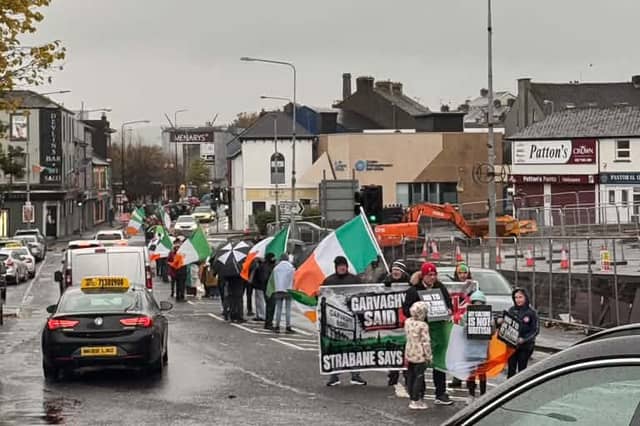
However, in October independent councillor Paul Gallagher voiced concerns about a UK award being given to a predominantly nationalist town.
During November’s council meeting, councillor Gallagher proposed that council does not progress to the full submission of the bid.
Independent councillor Jason Barr successfully amended the proposal, asking that council seek funding to “build on the work that has been done to now, and work towards an arts cultural year in Strabane for 2028’”
Councillor Gallagher said that while council staff had done “an enormous amount of work,” the Town of Culture bid had created “division” within Strabane.
“When we look at community relations (and) peace building, I believe this bid has the potential to be a disaster for Strabane and a disaster for community relations. If this bid was to go forward, it will create a major distrust of this council with the residents in Strabane,” he added.
Sinn Féin councillor Brian Harte supported the proposal and said the ‘UK’ branding of the award has “prevented a large section of the community from identifying with the bid”, while independent councillor Raymond Barr said he had been contacted by residents and the “vast majority reject the bid.”
SDLP councillor Catherine McDaid also supported the motion and said local concerns “need to be taken seriously”.
Councillor McDaid added: “A cultural initiative should bring people together (and) give them a shared sense of pride and ownership.”
“People have to feel their voices have been heard, that they can shape the future of their town, and their culture and heritage are represented,” she added.
“The considerable work that’s been undertaken by council staff, organisations and those who have contributed to the budget should now be put to good use, we should use them as a foundation to pursue other opportunities.”
Independent councillor Gary Donnelly said that for Strabane’s residents, the term ‘UK’ means “occupation (and) imperialism.”
“This nonsense, that proud people who struggled against imperialism should embrace a UK title, is absolutely wrong,” he added.
DUP alderman Keith Kerrigan noted that the £60,000 Shortlist Development Grant grant, £40,000 of which council has already spent, will have now have to be repaid to the UK Department for Culture, Media and Sport (DCMS).
People Before Profit councillor Shaun Harkin said a lack of public engagement had led to “frustration’” among Strabane residents, while UUP alderman Derek Hussey voiced concern that rejecting potential UK funding could set a precedent.
He concluded: “(A successful bid) could only be to the social and economic well-being of residents, business, and visitors, as has been proved previously in the city’s experience of having had the title of UK City of Culture (in 2013).
“It’s remiss, to put it mildly, to try and deny that opportunity to Strabane and its people.
“Nobody in this council chamber had any difficulty accepting the UK City Deal, because it applies to cities within the United Kingdom, (and) nobody had any difficulty when it came to the UK Levelling Up fund that has given benefit to my own town and to areas within the city.
“Can somebody define to me what would happen to be acceptable sources of funding?
“People complain; ‘oh the Brits, they’re funding this, they’re not funding that’, but here there is a fund which is being offered and it’s been refused, so where do we go for this funding?”
Councillor Gallagher’s motion passed, with UUP and DUP representatives voting against and all others voting in favour.