

McColgan hits back at misogyny against professional athletes
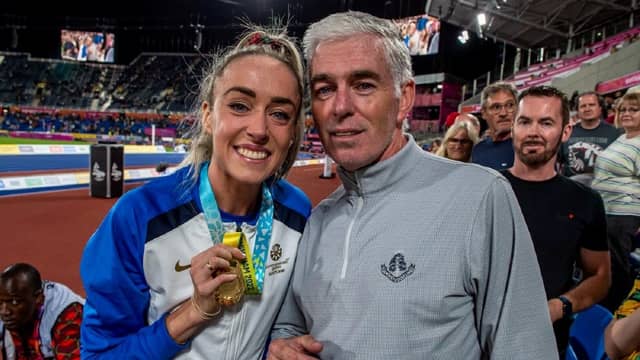

MISOGNY against women has always been prevalent in sport but has grown in recent years with the emergence of social media according to Olympic athlete, Eilish McColgan.
MISOGNY against women has always been prevalent in sport but has grown in recent years with the emergence of social media according to Olympic athlete, Eilish McColgan.
Eilish is a Scottish middle and long-distance runner with strong links to Strabane where her dad, Peter, a former record-breaking steeplechaser, hails from, with members of her wider family circle also residing in the town.
The UN Organisation for Women estimated that 87 per cent of abuse on X (formerly Twitter) seen in the Tokyo 2022 Olympics was targeted towards women.
It was only changes made in the 21st Century that ensured that all female athletes taking part were equal to their male counterparts in terms of training, finances and events.
Eilish is a four-time Olympic athlete and Commonwealth Games Champion.
She has experienced most problems that other female athletes will typically be subject to.
She highlighted the fact that female athletes’ achievements were undermined compared to their male counterparts.
When it came to physical appearance, that was when the media would intervene.
Ms McColgan said: “I’ve noticed personally with myself; I could break a record or win quite a large race- and the reporting around it is very limited.
“But if I was to get trolled online, for example, about my body shape or my image then my phone is ringing because all the journalists are trying to get in touch-asking ‘how does it feel getting trolled online or about your body shape.’
"Or it’s always things that are not to do with sport essentially or what I am really there to do.”
Ms McColgan said online trolls sent her messages day-to-day.
However, despite what they say, it does not tear down her confidence.
“I think one of the biggest challenges would be probably social media and just being trolled online," the athlete said.
"Having to constantly deal with comments around body image - nothing to do with how I perform as an athlete.
"It’s just all ‘you look sick, or you look anorexic, you must not fuel yourself properly.’
“So, I want younger women to see I am actually confident in my own body, because I am now."
She set up a non-profit organisation in Scotland ‘Giving Back to Track’ which aims to elevate women’s sports ensuring funding for female athletes as well as emotional support.
“We help around about 15 young female athletes every year with financial grants to make sure they can get to the British Championships because it’s always in England," she explained.
"So going from Scotland to England is not easy especially for the young kids that are up north.
“If they are having problems with fuelling or need a bit of advice about their periods or menstrual cycle, and ensuring that they actually are taking a period every month, is a really important thing as well.”
Anyone affected by gender discrimination and difficulties in sports can visit givingbacktotrack.org