

Strabane woman shares heart attack experience as part of new British Heart Foundation NI campaign
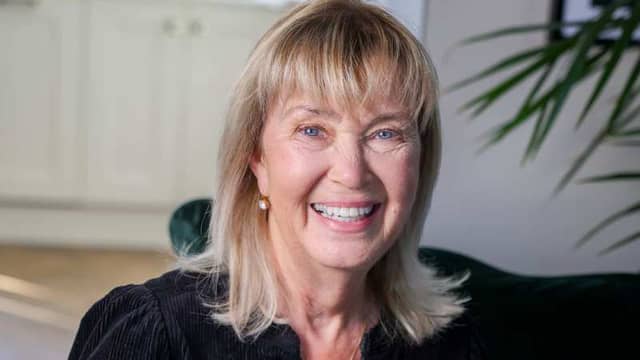

A STRABANE woman who had mistaken her symptoms for indigestion has shared her experience of heart attack as part of a campaign by British Heart Foundation NI which calls on the Executive to address the heart attack gender gap Mary Evans was at Stormont last Wednesday to help launch the charity's report.
A STRABANE woman who had mistaken her symptoms for indigestion has shared her experience of heart attack as part of a campaign by British Heart Foundation NI which calls on the Executive to address the heart attack gender gap
Mary Evans was at Stormont last Wednesday to help launch the charity's report.
As part of the campaign, Mary shared her story of how in April, at the age of 65, she experienced a heart attack.
“Up until I had a heart attack, I considered myself a fit and healthy person," she said. "It didn’t occur to me when I was experiencing chest discomfort that it might be a heart attack."
Mary felt what she has described as “under par” for about two weeks before seeking medical care but attributed this to loss of mobility and fitness after having recently broken her ankle.
“It didn’t occur to me to call the GP because I really didn’t think it was anything serious," she continued.
"For two weeks I felt sluggish and under the weather, but I didn’t know what I would tell the doctor.
"I didn’t know how to describe my symptoms. I put the chest discomfort down to indigestion, feeling lazy or feeling unfit."
On the evening of Tuesday, April 16, Mary felt what she thought was “awful indigestion”.
The next morning, Mary went to the pharmacy for over-the-counter medication to treat what she thought was indigestion.
When Mary went to the till to pay, she remarked to the cashier, “I am either having the worst indigestion of my life or I am having a heart attack” but Mary didn’t seriously think that she was having a heart attack.
The cashier was concerned and strongly suggested that Mary speak to the pharmacist who asked her to describe her symptoms.
When the pharmacist asked her “are you breathless on exertion?” she was then advised to contact the GP.
The GP told Mary that the symptoms she was experiencing could be angina, so she was referred to the emergency department.
“Thinking of the symptoms of a heart attack I would have thought of crippling chest pain or shooting pains in the left arm, but I just felt like I had really bad indigestion," she recalled.
“I was sent to the Cardiac Assessment Unit where the medical team attended to me immediately.
"I really felt I was wasting their time and kept apologising for being there for what I thought was indigestion."
The medical team did a troponin test which showed that her troponin levels were high.
The same test was repeated after four hours and by then Mary’s troponin levels had increased further.
The doctor said they would do an echocardiogram and a coronary angiogram.
“I didn’t really take in what the doctor was saying to me as he did the angiogram, probably because I didn’t want to take it in," the Strabane woman said.
"The nurse subsequently told me that I had experienced a heart attack, and that one artery was 70 per cent blocked.
"I only heard the words 'heart attack'.”
Mary expressed that she feels immense responsibility for having a heart attack.
"I never thought a healthy woman like me could have a heart attack,” she added.
“I was active, I walk and cycle a lot. I didn't want to call the GP because I know how busy they are, and I didn't want to waste their time".
Coronary heart disease (CHD) is one of the leading causes of death for women in Northern Ireland - killing twice as many women each year as breast cancer.
However, research has revealed that women are less likely than their male counterparts to know the symptoms of this devastating disease and less likely to get optimal treatment.
BHF NI has published a report on the heart attack gender gap and is calling on the NI Executive to deliver a Women’s Health Action plan that prioritises cardiovascular health and tackles these inequalities across the cardiac pathway.
It estimates that there are currently around 26,000 women in Northern Ireland living with coronary heart disease, however, women with heart disease are disadvantaged at each stage of their patient journey.
A growing global body of research over the years has revealed sex inequalities across the cardiac care pathway.
Head of Policy and Public Affairs for BHF NI, Denise McAnena, said: "There is insufficient awareness here of women’s risk of heart disease and heart attack which impacts women’s prospects of recovery due to delays seeking medical treatment.
"Such delays are further affected by systemic gender inequalities in the diagnosis and treatment provided to women who have experienced a heart attack.
“This is a long-established issue which presents as a series of biases and which must urgently be addressed by adopting a joined-up, collaborative approach to health and care.”
Denise added: “BHF NI is calling on the Northern Ireland Executive to deliver a Women’s Health Action Plan which prioritises cardiovascular health and tackles inequalities across the cardiac care pathway to close the heart attack gender gap.”