

New non-fatal strangulation offence comes into force
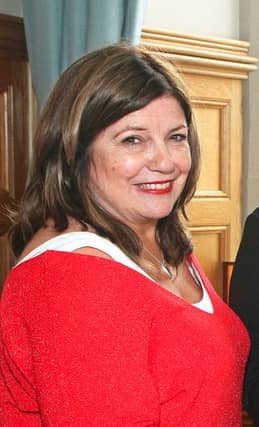

"It is the most terrifying experience for victims" - Foyle Women's Aid
"VICTIMS who have been strangled are eight times more likely to be murdered by their perpetrator."
That's the sobering reality disclosed by the head of a family justice centre that provides support locally to individuals and families experiencing domestic abuse.
Marie Brown is the chief executive of Foyle Women's Aid and Foyle Family Justice Centre (FJC).
Based in the city's Bishop Street, the FJC supports victims and survivors including those from across the Foyle, Limavady and Strabane areas, by offering a 'one stop' safe and neutral facility to support victims of abuse and break the cycle of violence in families
The centre is the first of its kind in the UK and Ireland.
It provides a multi-agency response to family violence and has been campaigning since 2014 about dangers of non-fatal strangulation.
Under new legislation, police can now charge people with non-fatal strangulation - the second most common method of female murder in the UK.
Attackers who strangle or asphyxiate their victims are now facing up to 14 years in prison.
Welcoming the new law that makes it a crime, Marie Brown said that strangulation is one of the most lethal forms of domestic violence and places victims at the highest risk.
“It is the most terrifying experience for victims, which has devastating psychological effects on them, in addition to a potentially fatal one," she said.
"Victims who have been strangled are eight times more likely to be murdered by their perpetrator.
“We know from victims coming forward to us that it is a very prevalent practice, designed to silence and control.
“The fact that there aren’t usually any visible external injuries means that people, including victims themselves, do not understand the dangers of non-fatal strangulation."
Foyle FJC has been campaigning for the introduction of legislation and raising awareness among professionals and victims since 2014, when FJC board members, solicitor Karen O’Leary, Judge Barney McElholm and Ms Brown learned about the dangers of non-fatal strangulation at an Alliance for Hope conference in San Diego.
“We were really struck about the lack of awareness here on this issue and we have been working since to bring in legislation,” Ms Brown continued.
“We hosted training in partnership with the Training Institute on Strangulation Prevention for professionals and members of the judiciary in 2019 and the issue was championed by Judge McElholm, in particular.
"We are grateful to him for his role in getting this legislation in place and ultimately saving lives."
Before the new legislation - made under The Justice Sexual Offences and Trafficking Victims Act NI 2022 - investigating police officers would have to provide evidence of intent to commit an indictable offence.
For example, if someone had been strangled in what was believed to be a sexually motivated attack, the officer would have to show that the perpetrator intended to commit sexual assault before they could pursue prosecution.
Now, this new legislation means that if you do anything that does or could restrict someone’s breathing in any way you should be prepared to face a prison sentence for this offence alone.
Non-fatal strangulation includes; any part of your body or another object such as a ligature like a scarf or belt, chokeholds or headlocks, hanging, drowning or smothering.
Strangulation and suffocation can also at times, leave no visible injury, making it previously even more difficult to prosecute.
This new legislation will take into consideration the emotional impact, trauma and fear that the victim experiences.
Senior police have described this as a “step forward in helping officers tackle the magnitude of the threat.”
To find out more about the Foyle Family Justice Centre or to refer to its services contact 028 71416800 or visit their website:
/foylefamilyjusticecentre.org/