

Council identifies £3.5m cutbacks as it sets rates hike
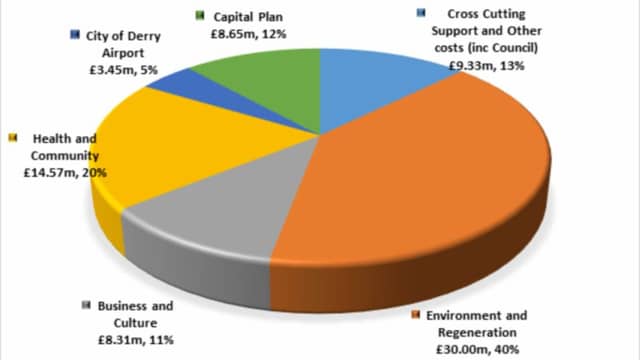
DERRY City and Strabane District Council has agreed cutbacks of over £3.5m as part its rates setting process. On Monday, councillors met to agreed a budget for the incoming 2023/24 financial year and set a 7.97 per cent district rates increase for ratepayers - however the decision was not taken unanimously with 28 in favour of the hike and eight against.
DERRY City and Strabane District Council has agreed cutbacks of over £3.5m as part its rates setting process.
On Monday, councillors met to agreed a budget for the incoming 2023/24 financial year and set a 7.97 per cent district rates increase for ratepayers - however the decision was not taken unanimously with 28 in favour of the hike and eight against.
The rates increase will see an average rates bill increasing by £40.74 per annum or 78p per week. The regional rate, set by central government, will be determined by the end of March and will have an impact on the overall rates bill.
Council says that on the basis that average property valuations are lower than in other council areas, the average ratepayer in the Derry City and Strabane District Council area "will continue to pay lower rates bills than average ratepayers in the majority of other council areas."
During Monday's meeting, the "unprecedented" challenges facing the local authorities were highlighted to members, with a report revealing details of cutbacks as the council seeks to maintain its public services.
The report to councillors stated: "The last year has seen unprecedented financial challenges for council and our residents and businesses.
"As council services continue to recover to pre-pandemic levels, council has had to absorb exceptional new cost pressures of over £11m in the form of global cost of living pressures and current inflation levels of 10.5 per cent, pressures associated with local and ongoing national pay negotiations, rates support grant cuts, construction inflation, as well as the normal statutory pressures and growth/ service development aspirations council normally faces in order to continue to deliver the essential services and new investment our citizens require.
"Recognising these unprecedented pressures and the challenges faced by ratepayers, council established a Finance Working Group during the summer to review all service budgets in detail and identify efficiencies and savings opportunities.
"As a result, following months of detailed engagement, savings and service cutbacks of over £3.5m have been agreed, which along with ratebase growth and the application of funding from council reserves ensures that a subinflationary rates increase has been proposed which will ensure that council finances remain on a sustainable footing as we hope for an economic recovery and a reduction in inflation levels."
The cutbacks include staff efficiency savings/voluntary severance; overhead efficiency savings; income generation including increase in off street car parking, building control and commercial refuse charges and sports development grant income; reductions in street cleansing and grounds maintenance services; alternate shared opening of rural recycling, centres; reductions in external service level agreements and a small reduction to festivals programme budgets; reductions to other non-core programme budgets including business support, tourism, regeneration, museum programming, Christmas lighting, investment, marketing, arts and culture, health promotion and museum programming.
Council said cutbacks in budgets agreed were made to ensure a minimal impact on the public with all services being maintained and jobs protected.
The report added: "Despite the significant challenges, council will continue to deliver a full suite of critical front line services to ratepayers.
"Council has had a clear focus on protecting jobs, statutory and core services, and funding to community organisations and arts and culture groups who rely on council grant funding to deliver community services and projects."
As part of this rates process, council said it has worked proactively to maintain funding to community organisations and arts and culture groups who are reliant on council grant funding to deliver essential community services and projects, with the exception of some cutbacks to service level agreements to Visit Derry and the Millennium Forum.
For local businesses, the rates rise will vary depending on the outcome of the new Reval 2023 process for each ratepayer which has seen average rateable property values in the council area reduced by 2.75 per cent.
Positive messages
"Derry City and Strabane District Council currently has a total of 5,654 non-domestic properties, of which 15 per cent are fully exempt from rates, 65 per cent are small businesses, who can avail of small business rates relief ranging between 20 per cent and 50 per cent of their rates bills, and 7 per cent are de-rated – that represents manufacturing companies for example who get derating relief of between 70 per cent to 80 per cent of their rates bills, with the remaining 13 per cent subject to full rates," council added.
"Despite the unprecedented challenges currently facing council, there are several positive messages from this year’s rates process.
"The council area has had 741 new domestic properties developed over the past year providing an overall 1.04 per cent benefit to this year’s rates process.
"Council has also invested an additional one per cent into rates to address the impact of construction inflation and increased financing costs on its ambitious capital programme."
As part of the rates process council has made budgetary provision for £90m of community projects including the development of the Brandywell Sports Centre, the Daisyfield Pitches, Acorn Project and Derg Active Project in Castlederg supported by funding from UK Government Levelling Up Fund.
Provision has also been made for the development of new cemetery provision for the west bank of the city, continued development of greenway provision within the city and across the council area, a number of rural revitalisation schemes in Newtownstewart, Castlederg, Sion Mills, Claudy, Eglinton and Park and continued investment in community facilities, pitches and playparks.
Council added: "In addition to this, Derry City and Strabane District Council continues to work towards the next stage of government approval for the circa £250m transformative strategic and economic projects through City Deal and Inclusive Future Fund.
"As part of this council is anticipating sign-off and commencement of the DNA project by early 2024 and is progressing business case development on a range of innovation, digital and health projects, the School of Medicine at Magee, and major regeneration projects in Strabane Town Centre and along the City Riverfront and Walled City.
"In conclusion, the agreed district rates increase whilst necessitating considerable efficiencies and cutbacks, will enable council to continue to drive growth and investment across the City and Region as well as ensure the delivery of critical front-line services from street cleansing and waste, building control, planning and environmental health, grounds maintenance, parks and cemeteries, leisure, sport, health and community development and support, and vital corporate support services."
To view the agenda and rates papers in full visit council's website or watch the meeting on council's YouTube channel.