

Talk on flax spinning mill in Sion
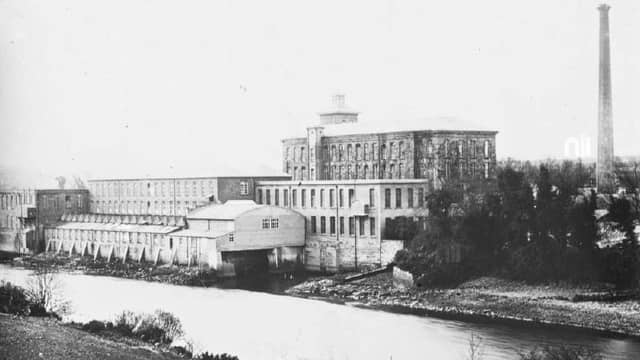

HISTORIC mills and their economic and social impact, with a special focus on the Sion Mills Flax Spinning Mill, is the focus of a heritage talk in the village. Sebastian Graham of the Ulster Architectural Heritage Society has completed a detailed study of the economic and social significance of mills down through the years and he will be giving a special presentation at the Heritage Education Centre, The Stables, Sion Mills tomorrow (Thursday) at 7.30pm.
HISTORIC mills and their economic and social impact, with a special focus on the Sion Mills Flax Spinning Mill, is the focus of a heritage talk in the village.
Sebastian Graham of the Ulster Architectural Heritage Society has completed a detailed study of the economic and social significance of mills down through the years and he will be giving a special presentation at the Heritage Education Centre, The Stables, Sion Mills tomorrow (Thursday) at 7.30pm.
Sebastian’s presentation will make particular reference to the history of Sion Mills and district and it is expected that this will generate a meaningful and interactive discussion.
Light refreshments will be served and the Sion Mills Heritage Museum will be open for visitors who wish to gain a deeper appreciation of the history of Sion Mills and the impact of the flax spinning mill.
The talk has been organised by the Sion Mills Building Preservation Trust (SMBPT) as part of its recently launched new series of heritage talks.
A spokesperson said: "The frequent occurrence of the word 'mill' in place names throughout this island reflects the economic and social importance of these structures, especially in the history of urban centres of population.
"The Oxford English Dictionary defines a mill as “a building fitted with machinery for manufacturing processes.” In the context of Ulster the manufacturing processes were, for the most part, the grinding of cereals to make meal/flour or the production of linen or woollen yarn.
"The mill was often the very first building to be erected and subsequently, with the increasing need for houses to accommodate the operatives in the mill and their families, a street system was planned and constructed.
"It goes without saying that the owner of the mill had power not only to shape the physical infrastructure of a village but also to influence the quality of life within these growing urban centres.
"The amount of imaginative planning both in terms of streetscapes and the provision of facilities to cater for people’s social and recreational needs tended to vary quit a lot, depending upon the outlook of the mill owner."
Model village
There are some quite outstanding examples of urban centres which reflect an enlightened and altruistic vision on the part of the mill owner.
Famous examples of these 'model villages; that spring to mind are New Lanark in Scotland and Port Sunlight in the Merseyside area of England.
"However, much closer to home, when the Herdman brothers established a flax spinning mill on the river Mourne in 1835 they also had a socially enlightened vision of creating a model village - Sion Mills," the spokesperson continued.
"They started quite literally with a green- field site, but within a few years of the mill becoming a going concern, reputable architects and building firms were employed to develop the infrastructure of the village.
"Furthermore, a high priority was given to the erection of buildings and facilities designed to cater for the social and recreational needs of the population of this new village.
"For example, their recognition of the social importance of integrated education is reflected in the establishment of a school in 1848, designed to cater for all the children of the village, regardless of religious, social or cultural background.
"A Cricket Club was to follow in 1864 and a recreation - hall erected on the mill site to cater for all kinds of social and recreational events.
"All of these developments had the aim of facilitating the growth of a well-integrated community whose members would have their physical, social and recreational needs adequately catered for.
"The Herdman vision was successfully implemented and a measure of its effectiveness is the not infrequent referencing of Sion Mills as an example of good practice in community building, not least during the 1970’s when community cohesion was unravelling in this province to an alarming degree."