

Strabane features among 'Last Voices of the Irish Revolution'
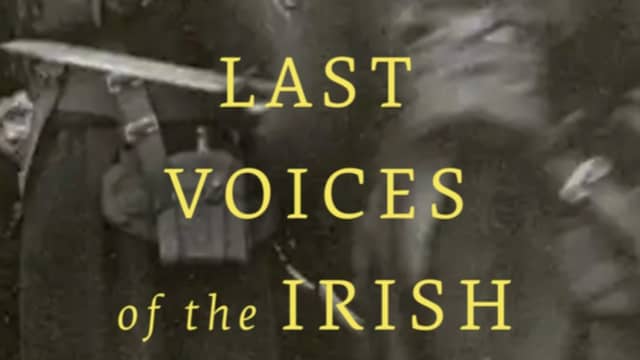

THE Irish Civil War ended in 1923. Eighty years on, author and documentary-maker, Tom Hurley, wondered if there were many civilians and combatants left from across Ireland who had experienced the years 1919 to 1923, their prelude and their aftermath.
THE Irish Civil War ended in 1923.
Eighty years on, author and documentary-maker, Tom Hurley, wondered if there were many civilians and combatants left from across Ireland who had experienced the years 1919 to 1923, their prelude and their aftermath.
What memories had they, what were their stories and how did they reflect on those turbulent times?
In early 2003, he recorded the experiences of 18 people, conducting two further interviews abroad in 2004.
Tom spoke to a cross-section (Catholic, Protestant, Unionist and Nationalist) who were in their teens or early twenties during the Civil War.
The chronological approach he has taken to his book spans fifty years, beginning with the oldest interviewee's birth in 1899 and ending when the Free State became a republic in 1949.
Among those Tom spoke to was Anthony McGinley from Co Donegal who was born in 1905.
During World War One his family moved to Strabane to take over the running of a public house.
When in 1915 the poet Thomas Kettle of the Royal Dublin Fusiliers visited the town to encourage enlistment into the British Army, Anthony's father challenged him as to why Irishmen should fight for England.
In 1920 Anthony joined the Fintown Company IRA in Donegal and spoke of Charlie Daly from Kerry who operated in Tyrone during the conflict.
He was executed in Drumboe in 1923.
Norman Douglas, born in 1909, who grew up in East Belfast.
He discusses his early life, school, attending 12th parades, his brother's service in World War One, Black and Tans, curfew, the Specials, a Catholic neighbour taking him to the pictures, James Craig, being present at the opening of the Northern Ireland Parliament, tramcars, the death of a soldier, the establishment of the RUC, Protestant decline in the south, his honeymoon in Dublin and his hopes for the future.
John Parkinson, born in 1907, who grew up on the Grosvenor Road.
He recounts his memories of seeing Titanic on three occasions, his father's membership of the UVF, World War One, his membership of the Boys' Brigade, soccer, his presence at the unveiling of the Belfast Titanic Memorial in 1920, seeing Craig, Carson and de Valera in Belfast, attending the opening of the Northern Ireland Parliament, tramcar attacks, the treaty, riots, a neighbour who was shot in 1922, Belfast Boys' Model School burning down, unionist reaction to the death of Michael Collins, becoming a teacher, a 1932 soccer match in Dublin and his memories of Belfast during World War Two.
Other interviewees had stories pertaining to Ulster also. Patsy Holmes, born in 1902, from Cork for example was interned in Ballykinlar Camp in 1921 and spoke of the northern men he met there including a priest named Father McLister from Co Antrim who used to visit to administer to the internees.
100 years after the Civil War ended, these 20 interviews recorded by Tom Hurley come together to create a unique oral account of the revolutionary period and the tensions that were brewing in the run-up and aftermath.
Together, theirs are the 'Last Voices of the Irish Revolution'.
'Last Voices of the Irish Revolution' by Tom Hurley is available in bookshops across the island of Ireland and can also be ordered online.
It is published by Gill Books.